



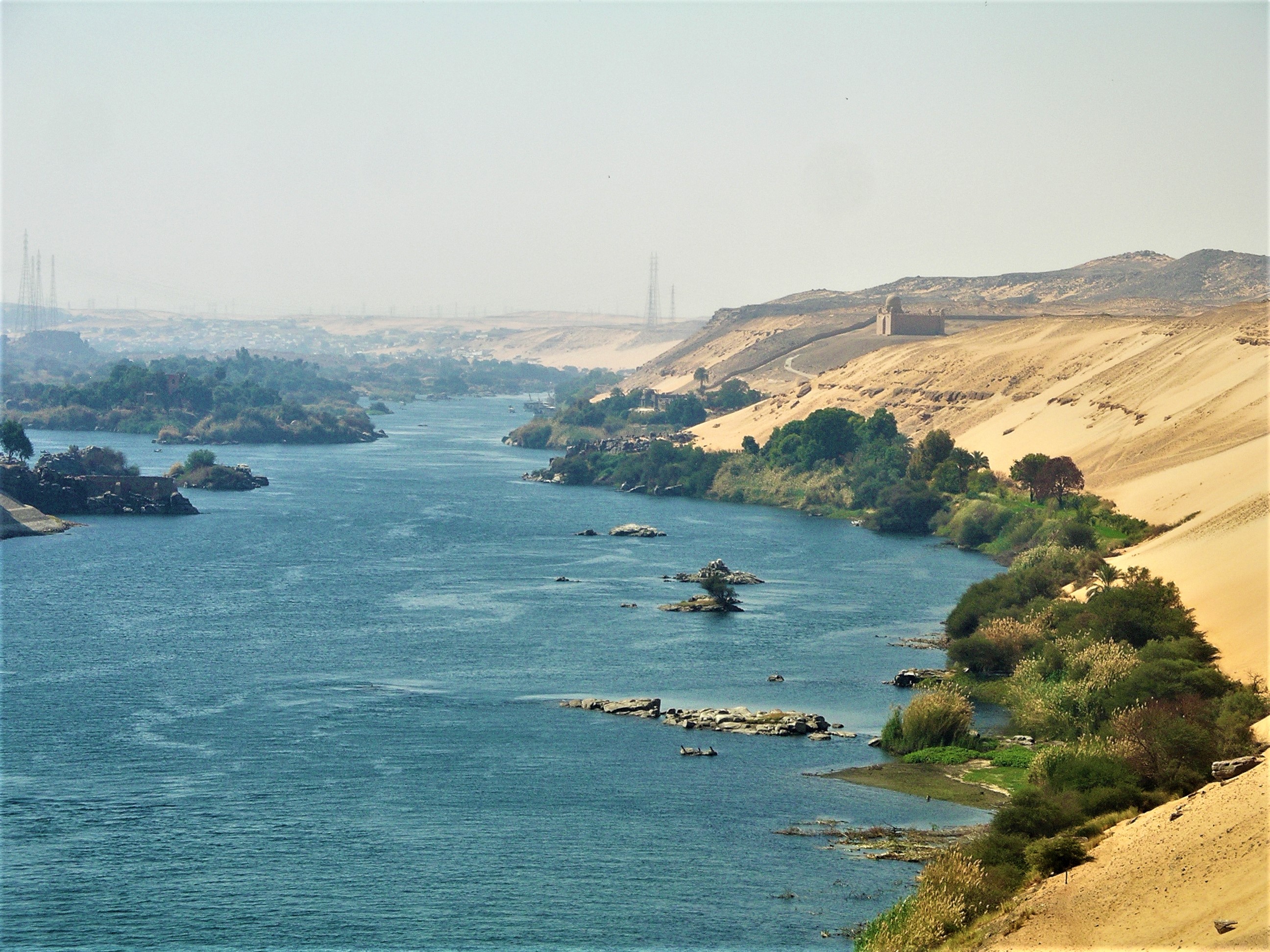
On the coming Tuesday, October 5 at 2.30 PM GTM+2 Dr Maria Carmela Gatto and Dr Oren Siegel will present their new project carried out at IKŚIO PAN as part of the POLS grant. The presentation entitled "Introducing BORDERSCAPE Project" will discuss the social and landscape transformations in the First Nile Cataract at the time of the emergence of the Egyptian state at the end of 4000 B.C.E.
The project is funded by the Norway Grants Financial Mechanism 2014-2021 (https://eeagrants.org/) through the Polish National Science Centre (https://www.ncn.gov.pl/?language=en)-POLS Call (2020/37/K/HS3/04097).
To get a link to this event, please mail to .
Looking forward to meeting you all
Abstract:
The seminar introduces BORDERSCAPE, a multidisciplinary project that aims at investigating how the rise of the Egyptian state at the end of the 4th millennium BCE impacted and transformed the social and spatial landscape of the First Nile Cataract region. A revolutionary process of state formation entailed profound changes in the socio-economic structure of Ancient Egypt, known to be the earliest territorial polity of human history, more so at its newly established borders.
The project develops along two lines of research, one applying a spatial perspective, including insights from geospatial analysis, the other focusing on ethnicity and identity, an approach in line with an anthropological perspective. Its main objectives are reconstruction of the ancient settlement landscape (when, how, and why changes happened), defining patterns of land use, sites interconnectedness and possible pathways. Furthermore, the project will seek to investigate group affiliation of the local population, the possible differences in ethnicity (or better, in the ethnicity displayed) between the regional centres, Elephantine and Kom Ombo and their hinterland, and the way the dynastic centralised power coped with identity fluidity and population mobility, in comparison to pre-dynastic times. Another pivotal goal is to comprehend how the changes occurring in Egypt affected the socio-political dynamics in Nubia.
The project’s expected outcome is two-fold: to build a new theoretical model on how this earliest example of borderscape was shaped by the rising centralised power; and to create an open access Web-GIS, which will be made freely available online thanks to the bilateral cooperation between Norway and Poland.
The project is established at the Institute of Mediterranean and Oriental Cultures of the Polish Academy of Sciences and funded by the Polish National Research Centre and the Norway Grants.