


- Details
- Category: news
- Hits: 690
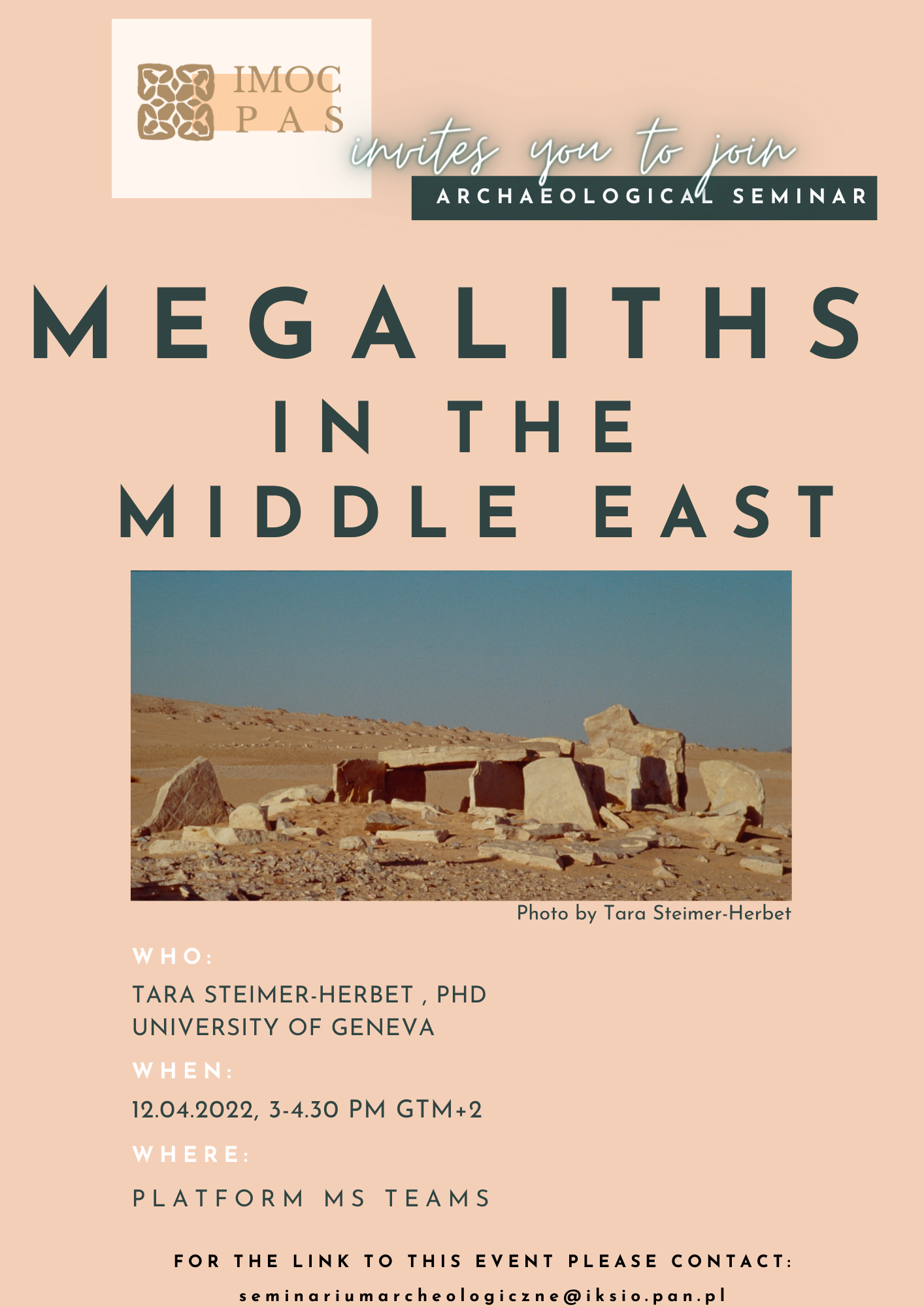
Abstract:
Dr Tara STEIMER-HERBET will present a lecture on the Middle Eastern megalithism spread and the significance of the societies of megalith builders. Seven thousand years ago, the Middle East witnessed the emergence of new funerary rites. Previous traditions of burying the dead directly in the earth, in jars or ossuaries were replaced with a new practice of inhumation in megalithic tombs. This change can be observed in the societies living in the mountains of the Akkar region in Lebanon but also in the Jaulan plateau in Syria, the Jordan valley in Jordan, the al-‘Ula and Khaybar in Saudi Arabia, the Jawf and the Hadramawt in Yemen, and the Dhofar and Jabal Hafit in Oman. In her talk, Dr Steimer will define the concept of megaliths and will focus on the so-called ‘dolmens’ or ‘tower tombs’.
The first manifestations of megalithism appeared in the ninth millennium BC in Turkey and were continued in Indonesia. The peak of megalithism in the Middle East falls between the end of the fifth to the end of the third millennium BC. Recent systematic surveys and excavations have changed our perspective on the distribution patterns of megalithic tombs. Until 2000, it was believed that the megalithic necropolises were distributed alongside a narrow north-south axis along the Rift ditch, extending from the Dead Sea to Aleppo, along the Jordan, Litani and Orontes rivers. Today, we know that the societies practising megalithism occupied varied landscapes from the forests of the Syrian Jaulan to the steppes of the Sabatayn desert in Yemen.
Colin Renfrew was one of the first to ask the question: “why megalithism?” The numerous studies on the distribution of monuments show that these constructions shaped the landscape and made certain areas sacred. The megalithic monuments are considered markers of territories, with a pronounced hierarchy, expressed using "tails", funerary "chains" or enclosures in the necropolises and the tombs.
The conditions that determined settlement patterns of the megalith builders were the availability of stone appropriate for different formats - from simple elements such as the stelae, menhirs or even statues to large constructions such as tombs, sometimes houses. Megalithic societies were highly creative. Also, the presence of the grazing lands or the conditions suitable for horticulture were crucial factors in choosing megalithic occupations. By using large stones as means of expression and to honour the deceased and/or their ancestors, the megalithic societies showed their economic capacities. Such constructions required significant resources and collective effort. We hypothesize that these societies had access to multiple resources, exotic goods, and handicrafts. Apart from the access to resources, the megalithic societies seem to have favoured the communication axes facilitating economical exchanges with the urban populations centered around the major rivers. As such, these megalithic groups played a key role in the formation of societies.

- Details
- Category: news
- Hits: 726
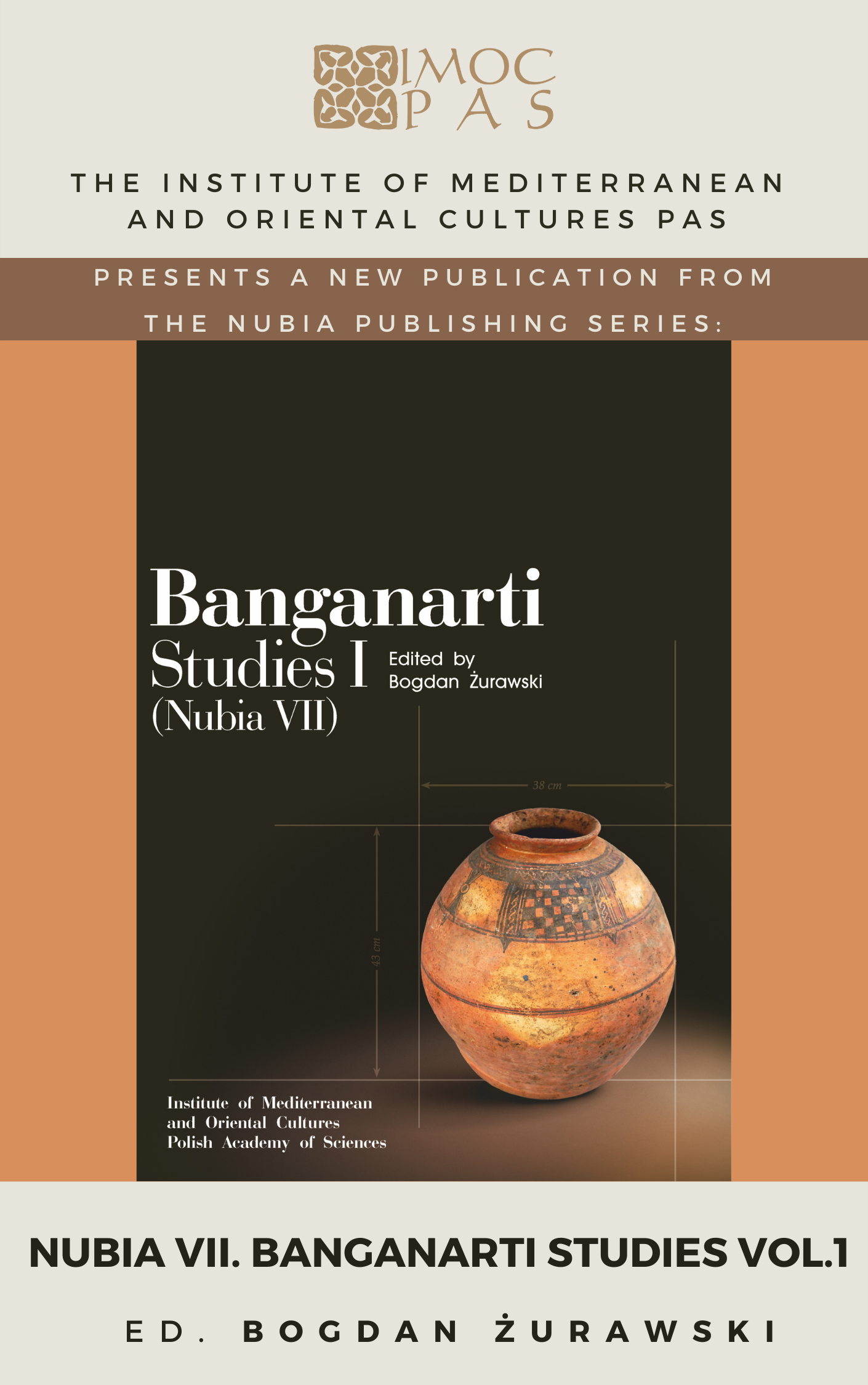
The present book was published thanks to a grant from the National Science Centre of the Republic of Poland: Archangels and Locusts: Daily Life in Banganarti, a Pilgrimage Centre on the Middle Nile, 6th through 16th Centuries (grant agreement no. 2016/21/B/HS3/03724), with a contribution by the Qatar Sudan Archaeological Project. The book is available here!
- Details
- Category: news
- Hits: 747

The Institute of Mediterranean and Oriental Cultures PAS
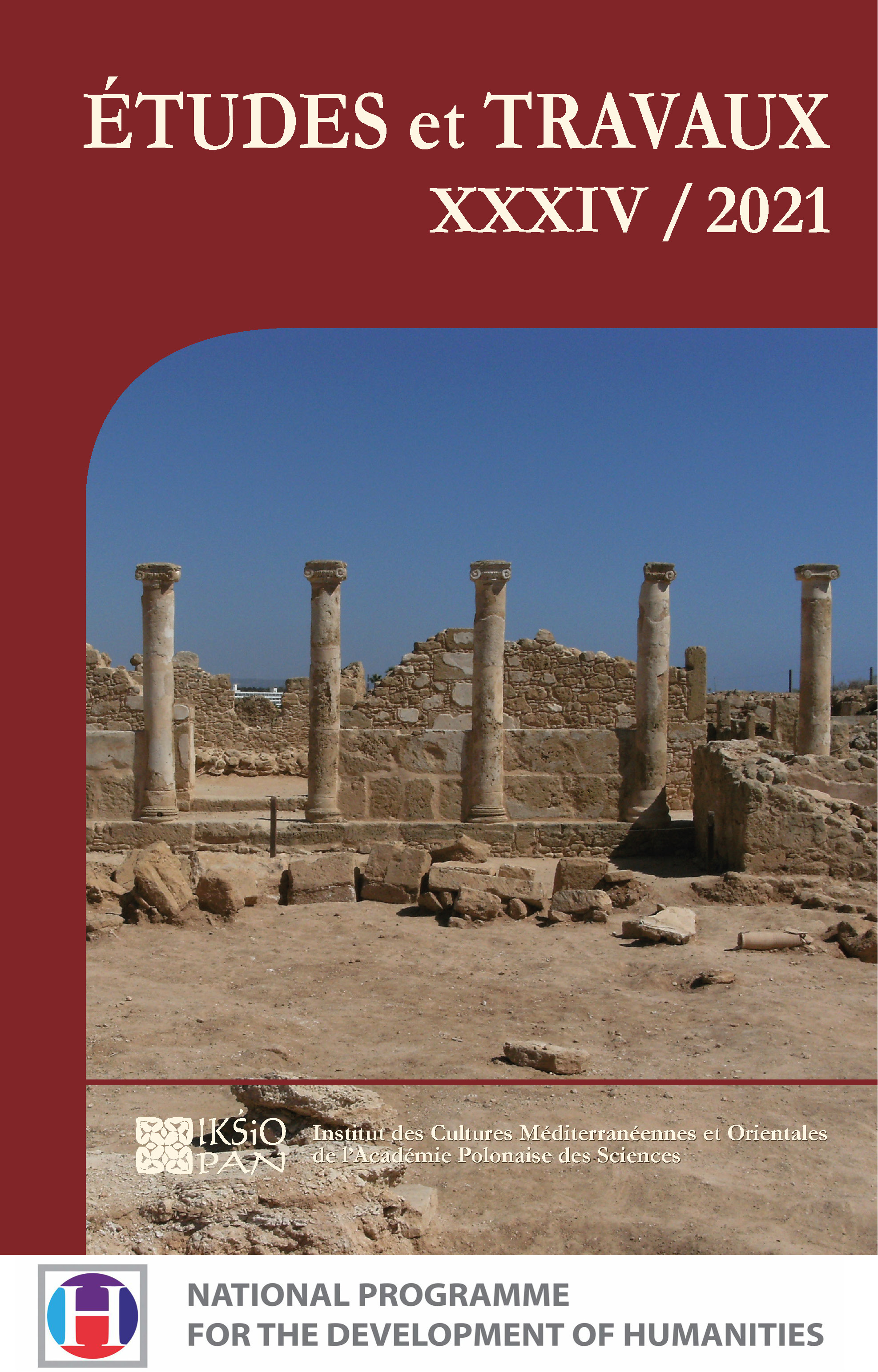
We are pleased to inform you that the electronic version of the 34th volume of our journal, Études et Travaux, is already available (without any limitations) on the journal’s website (http://www.etudesettravaux.iksiopan.pl/index.php/en/current-issue).
This volume is devoted especially to Cyprus, and the Hellenistic-Roman period.
The 34th volume of Études et Travaux has been funded through the programme of the Minister of Science and Higher Education of Poland entitled “Narodowy Program Rozwoju Humanistyki” in 2016-2021 (“The National Programme for the Development of the Humanities”; project no. 3bH 15 0099 83).
- Details
- Category: news
- Hits: 824
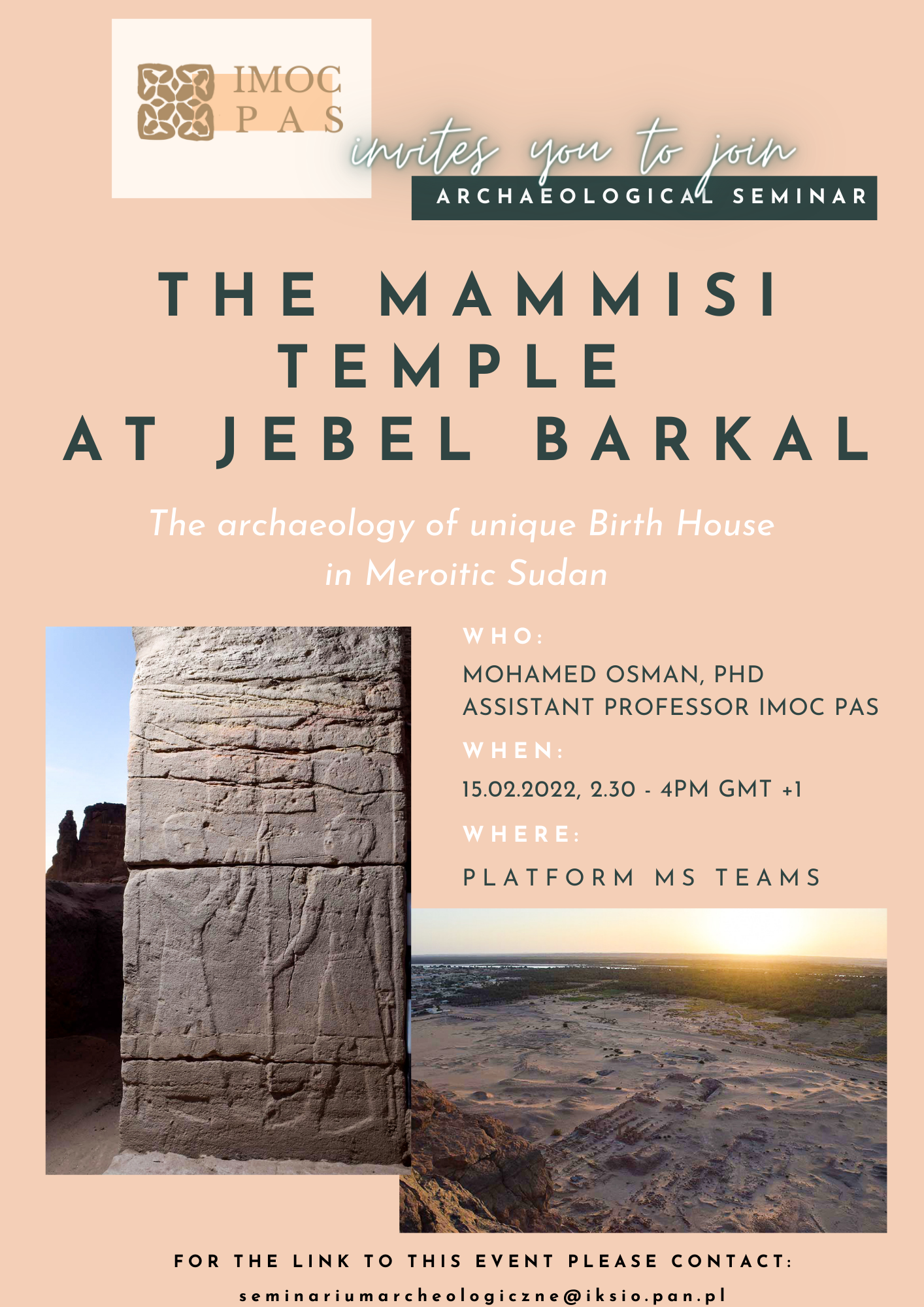
Abstract:
Dr Mohamed Osman is a co-director of the Sudanese Archaeological Mission at Jebel Barkal and an assistant at IMOC PAS.
During the talk, some of the recent discoveries of the Sudanese Archaeological Mission of the National Corporation for Antiquities and Museums at Jebel Barkal will be presented. Jebel Barkal is one of the most important archaeological sites in Sudan. Since the 1920s, the archaeological work done there unearthed many temple complexes, which date back to the middle of the 18th dynasty and continue through the Kushite and Meroitic periods. The site of Jebel Barkal, the southernmost residence of the god Amun, was an important cult centre for the Egyptians throughout the time of their domination over Kush. The ancient Kushites were significantly influenced by Egyptian religious beliefs and integrated them into their religion, for instance, a concept of divine kingship. In Egypt, the structures called "Birth Houses" or Mammisi were strictly associated with this concept and were either a part of the temple or were separate buildings that belonged to the temple complex. The walls of these relatively small structures were usually decorated with scenes of the divine birth of the king and the associated mythology which was deeply connected to the cult of Isis and Horus. Examples of such Mammisi scenes can be found in Deir el-Bahari, Edfu, Philea, and Dendereh.
In 2014, a Meroitic period Kiosk was discovered at the northern side of the main axis of the Amun Temple at Jebel Barkal. This sandstone structure dating back to the 2nd century AD was expected to be connected with a bigger structure. Indeed, during the 2014-2015 season, the team of the Sudanese Archaeological Mission at Jebel Barkal uncovered a significant structure in the temple area, directly behind the Kiosk. The archaeological work was concentrated at what was identified later as the Mammisi temple of Jebel Barkal.